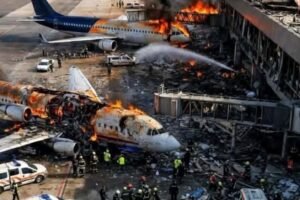
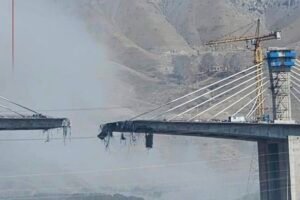
On the first day of 2025, the world seemed to pause, holding its breath as nature and chaos collided in ways few could have imagined. Just as the calendar turned over, lightning tore across the sky in a series of eerie, almost premonitory strikes. Within hours, three catastrophic events unfolded, shaking communities and leaving experts scrambling for explanations. These were not simple accidents or isolated incidents—they were a chilling prelude to a year of turmoil that would test humanity in ways no one anticipated.
A Sky Lit With Ominous Warnings
Eyewitnesses described a sky that seemed alive, with bolts of lightning splitting the horizon in patterns that defied natural logic. The air was electric, thick with tension, and people across multiple continents reported an overwhelming sense of foreboding. Meteorologists confirmed that the lightning activity was far beyond normal seasonal storms, a freak phenomenon that coincided almost exactly with the first attack, amplifying the sense of dread that gripped the world.
In small towns and sprawling cities alike, citizens took cover. Social media exploded with footage of lightning arcs and ominous cloud formations, while hashtags like #SkyWarning and #StormOfTheCentury began trending within minutes. Scientists speculated on the unusual atmospheric conditions—some pointing to solar flares, others to a rare alignment of the planet’s magnetic fields—but no single explanation could account for the scale and intensity of what had just begun.
The First Strike: Chaos Unleashed
The first attack occurred in a bustling urban center, where a sudden explosion tore through a government building. Emergency services were overwhelmed as the magnitude of the destruction became clear. Eyewitnesses spoke of a deafening roar, a shockwave that shattered windows and sent debris flying, and a panic that spread like wildfire. Hospitals reported hundreds of injuries, and initial reports suggested that the incident was coordinated, rather than accidental—a harbinger of what was to come.
Authorities were quick to respond, but even seasoned first responders described the scene as unlike anything they had encountered. Streets were blocked, communications were disrupted, and a sense of helplessness settled over the city as the human toll began to mount.
The Second Event: Nature Strikes Back
Barely hours after the first incident, the second catastrophe struck—this time, nature itself seemed to take aim. Severe flooding swept through low-lying areas following unprecedented rainfall, isolating communities and leaving thousands stranded. Bridges collapsed, roads disappeared under torrents of water, and rescue teams fought desperately to reach those trapped by the rising waters.
Experts later attributed the flood to a combination of extreme weather patterns and compromised infrastructure, a perfect storm that compounded the panic already gripping the nation. Families huddled in emergency shelters, watching helplessly as news reports confirmed that multiple regions were now simultaneously experiencing disasters.
The Third Catastrophe: A Human-Made Nightmare
While the first two incidents could be classified under natural and accidental events, the third was unmistakably human-made—and terrifying. Just as emergency response teams were beginning to stabilize the situation, news broke of a cyberattack targeting critical infrastructure. Power grids were shut down across multiple states, traffic systems failed, and hospitals struggled to operate without electricity.
Cybersecurity experts later described the attack as “sophisticated and unprecedented,” a digital assault capable of crippling modern life in an instant. The psychological impact was profound—millions felt vulnerable in a world that had suddenly proven fragile, and the combined weight of natural, accidental, and deliberate disasters left communities reeling.
A Global Reaction: Fear, Confusion, and Unity
The response to the triple events was immediate. Governments activated emergency protocols, international agencies coordinated relief efforts, and citizens turned to social media for information and reassurance. Yet, despite the chaos, stories of resilience and humanity began to emerge. Neighbors helped neighbors, strangers shared resources, and communities organized local aid networks to counteract the overwhelming scale of the disasters.
World leaders convened emergency summits, calling for unity and calm. Analysts began dissecting the events, searching for patterns, motives, and potential solutions. While uncertainty loomed large, the collective response underscored a critical truth: even in the face of unprecedented chaos, humanity’s capacity for cooperation and courage remained intact.
The Long-Term Impact: Lessons from a Single Day
Though January 1, 2025, lasted only 24 hours, its reverberations would be felt for months, even years. Economies faltered under the strain of damaged infrastructure, insurance claims skyrocketed, and scientific communities were spurred to study the rare convergence of natural and human-induced catastrophes. More importantly, the events forced societies to reconsider preparedness, resilience, and the delicate balance between human ambition and environmental stewardship.
Preparing for the Unthinkable
Experts now argue that the events of that day are a wake-up call. From investing in resilient infrastructure to prioritizing cybersecurity, the lessons are clear: preparation can save lives, but complacency can be fatal. Communities have begun implementing advanced early-warning systems, cross-agency coordination plans, and public awareness campaigns designed to educate citizens about risks, potential disasters, and steps to take when the unexpected occurs.
Reflections: Humanity in Crisis
As the dust settled, survivors shared stories of courage, loss, and hope. Some lost homes, loved ones, or livelihoods, while others discovered inner strength they never knew existed. Across media platforms, blogs, and community meetings, narratives of perseverance emerged, highlighting that even in the darkest moments, the human spirit could endure and rebuild.
The events of January 1, 2025, serve as a stark reminder of life’s unpredictability, the power of nature, and the vulnerabilities of our interconnected world. Yet, they also illuminate humanity’s potential to adapt, respond, and ultimately survive.